
- 1994
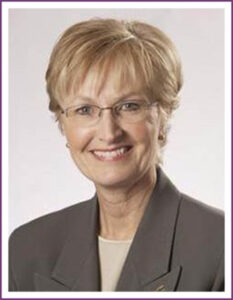
Frances ‘Fran’ Ulmer – Alaska’s first statewide elected woman, elected for 2 terms as Lt. Governor 1994 – 2002 (read more below). photo credit – www.alaskawomenshalloffame.org
Once again Juneau residents could breathe easier after the latest round of the capital move threat. Voters defeated the latest proposal on November 8 to move the Alaska capital away from Juneau and approved of new FRANK initiative to ensure that no future capital move scheme could go forward without voters being apprised of all direct and indirect costs. A last-minute effort in January to collect signatures to put the FRANK initiative on the November ballot was successful. The pro-move initiative to move the capital, this time to Wasilla, was defeated by a 55 percent margin, while another proposal to hold annual legislatures along the rail belt corridor between Seward and Fairbanks failed to gain enough support to make it a ballot issue. This was the third time (1972, 1984, 1994) that a FRANK initiative turned the tide against capital moving as voters continued to weigh actual costs against supposed benefits.
show more
The capital move vote also affected other aspects of life in Juneau. Housing, already tight with the lowest vacancy rate in the state, remained a critical problem for many residents, particularly lower income earners. New construction was basically on hold up through the fall elections as were home sales, as government workers waited to see if their jobs would remain in town or not. Qualified buyers for subsidized low-interest state and federal loans found few units to buy under program criteria, hundreds of people filled the waiting lists for low-income housing, local homeless and family shelters were full, and homeless people spilled out into cars, abandoned buildings, and the woods. Non-profit housing organizations had plans for building up to 100 new units and private developers considered new construction options, but a city official said that much more was needed.
Despite lack of housing, more retail space was added in the community when Kmart opened a new large box store by Switzer Creek in April and a Mapco gasoline station opened nearby in January. Gas prices tumbled as Mapco dropped its prices as much as 25 cents/gallon, influencing similar reductions by local competitors, although other stations reported significant loss of customers and at least one station closed down later. Retail growth with lowered prices attracted increased shopping by residents from smaller towns in the northern southeast Alaska region, such as Petersburg, Angoon, Kake, Sitka, and Haines, marking Juneau as a regional supply hub more than ever and significantly contributing to its own economy.
Tourism continued its upward trend. The 1994 season showed a 20 percent increase in cruise ship visitors, combined with those arriving by other means, to total just under half a million people coming to check out our sights. Their combined spending contributed an estimated 15% to the Juneau economy, but locals started to question the impacts to quality-of-life issues such as overcrowding on the waterfront, streets, and trails and suggested that limits be considered to manage future growth. And another increase in visitors was predicted for the 1995 season.
A $3 million shortfall in the school budget resulted in layoffs of 40 teachers, aides, and other support staff, and increased classroom crowding. The student-teacher ratio climbed to 27-1 overall in the elementary schools. Crowding at the valley’s Floyd Dryden Middle School was relieved somewhat, however, with the opening of the new Dzantik’i Heeni Middle School (Tlingit for “where the flounders [or flatfish] gather”) by Switzer Creek. The school board, in naming the new middle school, steered a new course in its policy by now requiring geographic names be attached to new facilities rather than the older policy of naming them for individuals. An advisory committee tasked with recommending a name for the school selected a Tlingit place-name “dantik’i heeni” but not without controversy. It was, however, approved by the school board, the district’s first Tlingit name for a school.
Former Mayor Fran Ulmer was elected Lieutenant Governor to serve with Governor Tony Knowles, making her the first elected female Lieutenant Governor and first woman to be elected to statewide office in Alaska. Byron Mallott was elected Juneau’s first Alaska Native mayor. A month and a half into the following year, however, he resigned to take the position of executive director of Alaska’s Permanent Fund Corporation, a move he felt would consume all his time, and not allow him to also fairly deal with the municipal responsibilities. Deputy Mayor Dennis Egan then was appointed to serve as interim mayor and then was elected for two subsequent terms. Juneau’s five volunteer fire departments were merged February 1 into a single administrative organization, Capital City Fire/Rescue (department), to standardize training and response. Each of the previous separate departments then became districts within the agency and it is guided by a steering committee of the district chiefs. Volunteers were now protected with immunity from liability, and the department’s goal is to provide the public with safer and more efficient service.
Safe drinking water became a community concern when 300 resident Dolly Varden trout were reported in a fish kill along Gold Creek in March, between an area where water discharged from a mining tunnel in the AJ workings and the aquafer where the city water system wells were located. As Echo Bay mining company was actively exploring in the old workings as part of its project to reopen the mine, attention immediately focused on possible pollution discharges that may have resulted in the fish kill. An intensive investigation checked water and sediment samples and examined a wide range of possible causes, but no specific cause was identified. Echo Bay denied any responsibility for the kill, but was slapped with a $250,000 fine by the state for not reporting hydraulic fluid leaks from its equipment underground and the EPA shut down its operations for a while for discharging polluted water into the creek without a permit. At year’s end the EPA released a 300 page, two volume technical advisory report to assist the U.S. Army Corps of Engineers in determining whether or not to issue a federal Clean Water Act permit, but faulted Echo Bay’s plan as failing to protect water quality and wildlife resources from mine discharges. Local mine opponents hailed the report “as a mine stopper” but Echo Bay was looking to a review of the whole issue the coming spring by an independent panel of scientists to vindicate their plans.
Dollys weren’t the only fish in the news. On the positive side, fishermen experienced one of the best seasons for coho salmon fishing seen for a long time. Both sport and commercial fisherman pulled in record numbers of silvers and a local state sport fish biologist reported that “coho fishing doesn’t get any better than this.” High freshwater and ocean survivals combined for the returning fish were attributed to the season’s success.
Another record was set again for weather. Juneau survived the snowiest year on record, 212 inches, with 69.8 inches falling alone in November. This handily beat the old record of 188.7 inches set in 1971. Eaglecrest ski area opened earlier than ever, skiers and outdoor sports shops were happy, and city and state road maintenance employees and private snow removal firms were busier than ever. And residents had their hands full keeping ahead of the white stuff.
show less