
- 1989
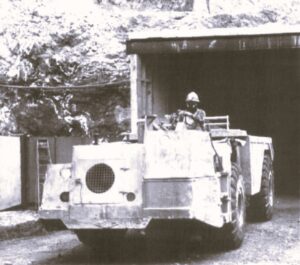
Greens Creek Mine ore hauler exiting portal with silver-gold-lead ore, 1989. photo credit: Alaska’s Mineral Industry 1989, Alaska Dept. Natural Resources, DGGS Special Rept. 44, 1990, p. 42.
Rising property values, a turnaround of the housing market, and crowded schools marked an improvement of Juneau’s economy this year. Greens Creek Mine, which became the largest underground silver producer in North America, opened on Admiralty Island, initially employing 260 workers from Juneau, and increased effort was applied to reopening the historic Kensington and Alaska Juneau mine properties. With an expanding population, foreclosed homes were bought up, rents increased, and the housing market boomed as properties rose significantly in value. The tourism sector continued to expand while the state labor force began to increase slightly.
show more
The AJ mine work, however, became the focus of major controversy as opponents cited possible environmental degradation (with the mine opening so close to downtown), including pollution, and the loss of the Sheep Creek valley to a proposed tailings dam on the upper basin. Proponents favored the development for the economic boost and diversification it would bring. The city, for its part, revised its mining ordinance with stricter language for land reclamation and mitigation of adverse environmental and socioeconomic impacts.
Weather extremes captured headlines as well. It was a remarkably dry and warm summer, with the year bookended with heavy snows and cold snaps. The year started out with near-record-breaking snowfall of 67.1 inches, in January alone, then the community shivered during a devastating cold snap in February (with a low of -6° at the airport), but enjoyed the longest stretch of blue skies since 1881. Eaglecrest Ski Area experienced record snows, but an effort to reduce avalanche danger on the Thane Road backfired in January when the resulting planned avalanche blocked the road and took out several powerline towers from the area’s main electricity source from Snettisham. Failure of one of the big diesel back-up generators forced residents to reduce electrical use for a while. Below normal precipitation continued through the summer with record high average summer temperatures. The fall continued warm but wet before another cold snap and heavy snows arrived again to herald winter; then Christmas was a balmy 48 degrees and wet.
The city, used to being asked for money for various civic projects, found itself in an unusual position when the Juneau Golf Club handed it a check the end of the year for over $40,000 to be held in trust 14 years before then being used to develop a recreational area in the Mendenhall Valley. The club intended to add to the principal in that period. It proposed a combination golf course, with hiking and horse-riding trails, fishing dock, a turf playing field, an amphitheater, and an ice skating and hockey area, possibly in the Dredge Lake area. City officials accepted the gift and said essentially “thanks, we’ll see to it when the time comes…”
Voters approved a major bond issue October 3 to build a new middle school in the Lemon Creek area and provide for repairs and upgrades at other elementary schools, as well as a lesser bond to fund covered play areas at a number of schools. Several major construction projects were completed, including renovation and expansion of the Bartlett Memorial Hospital finished early in the year, a new library on top of the city’s waterfront parking garage opened in January, and renovation of the indoor Augustus Brown swimming pool completed over the summer.
Human tragedies were varied. Juneau was shocked by the first random murder in recent memory. Prosecutors say a young couple, recently arrived from Colorado, randomly knocked on the door of a Mendenhall valley resident and then stabbed him to death July 17, allegedly with robbery as the motive. A young girl drowned in Twin Lakes in July, while two construction workers and a miner died in separate work accidents. A Lemon Creek prison inmate committed suicide in February. Fires also took their toll with several homes destroyed around the area, but thankfully no injuries resulted.
Juneau began to address its homeless population as the local housing crunch and increase in unsheltered individuals and families spurred agencies into action. The Glory Hole shelter and soup kitchen received a $300,000 legislative grant to begin construction of a downtown facility and the St. Vincent de Paul Society broke ground by the airport September 3 to construct a family shelter to provide short-term food and housing assistance.
Elizabeth Peratrovich (1911-1958) was selected by the Alaska Women’s Commission in December to be one of the initial inductees into the Alaska Women’s Hall of Fame, with the formal induction to be held next March. The second women so honored, she was especially recognized for her work to ensure passage of anti-discrimination legislation in the Alaska Territorial Legislature, and to promote full civil rights for all Alaskans.
Juneau experienced first-hand a thawing of U.S. – Soviet relations, when several Soviet delegations and individuals visited the area to develop projects for information exchange and possible joint-venture opportunities. A couple of Soviet rock bands also visited in February to perform here. Juneau-Douglas High School students developed their own relationships in October with Moscow counterparts via a computer link , while working together on a global health issues study.
The Exxon Valdez oil spill in Prince William Sound in April didn’t generally affect Juneau or Southeast residents directly, but as dozens of positions for state and other agencies were created to deal with the spill, many Juneau-based employees found themselves commuting regularly to the sound and back. Although some local fishermen, who did have permits for that area suffered losses, other Juneau residents who worked the summer on spill cleanup became known as “spillionaires.”
show less